
Let me be honest with you.
Most articles about Japanese food etiquette read like a rulebook your boring uncle wrote. Long lists. No context. Zero personality.
But here’s the thing Japan’s food culture isn’t about following rules. It’s about respect. Once you understand why these customs exist, remembering them becomes effortless.
I’ll walk you through everything you actually need to know. No fluff. No lectures. Just real, practical stuff that will make your dining experience in Japan genuinely better and keep you from accidentally offending the chef.
First, Two Words You Must Learn Before You Even Pick Up Chopsticks
Before any food rule learn these two phrases. They matter more than anything else on this list.
Itadakimasu (ee-ta-da-ki-masu) you say this before eating. It roughly means “I humbly receive.” It’s a thank you to the food, the farmer, the cook, and the universe all at once. Even in casual restaurants, Japanese people say it quietly. You should too.
Gochisosama deshita (go-chi-so-sa-ma desh-ta) you say this after eating. It means “that was a feast.” If you can say this to the chef or server on your way out, you’ll get a smile you’ll remember for years.
According to the Japan National Tourism Organization, these two expressions are the foundation of Japanese dining culture rooted in the “omotenashi” spirit of hospitality and mutual appreciation.
These two phrases alone will earn you more goodwill than knowing every other rule on this list combined.
The Chopstick Rules Everyone Talks About (And Why They Actually Matter)
Yes, you’ve probably heard “don’t stick chopsticks upright in rice.” But do you know why?
As Japan Airlines explains in their dining guide, sticking chopsticks vertically into rice mirrors the incense sticks placed in rice bowls during Buddhist funeral ceremonies as an offering to the deceased. When you do this at a dinner table, you’re literally recreating a death ritual. Japanese people won’t scold you but it genuinely makes them uncomfortable.
The second big taboo passing food chopstick-to-chopstick also comes from funeral customs. According to Inside Japan Tours, this motion directly recalls the ceremony where family members use chopsticks to pass the bones of the cremated into an urn. Even young Japanese people who aren’t deeply religious will feel uneasy seeing this.
The Big Two (Never Do These):
- Never stick chopsticks vertically into rice
- Never pass food chopstick-to-chopstick
The Other Ones:
- Don’t point at people or things with chopsticks
- Don’t use them to drag plates toward you
- Don’t spear food with them like a fork
- When not using them, rest them on the hashioki (chopstick rest) or lay them horizontally across your bowl
Struggling with chopsticks? Just ask for a fork. Especially in touristy areas, restaurants expect this and have no problem with it.
The Rice Rules (Japan Takes This Seriously)
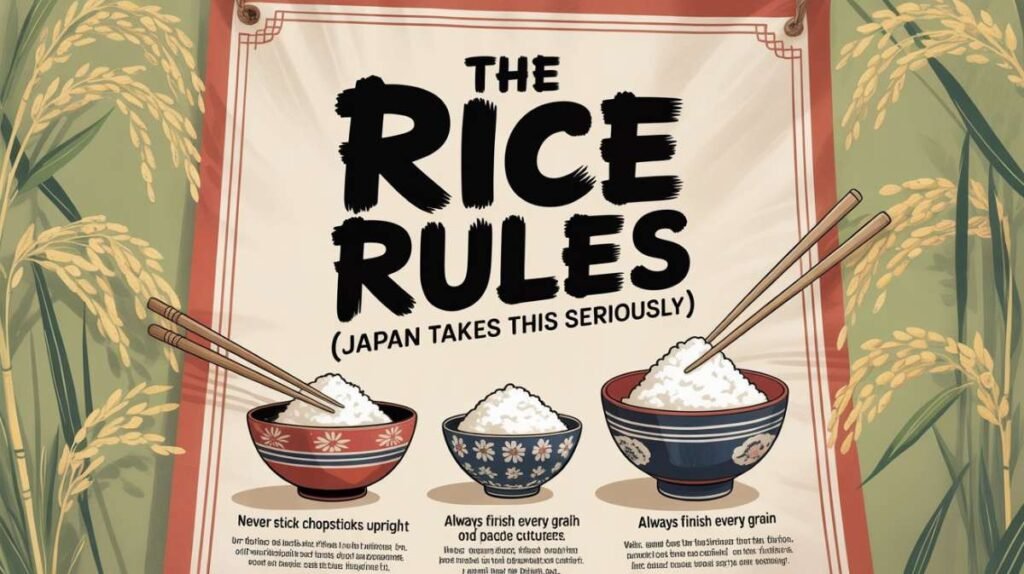
Rice in Japan isn’t just food. It’s cultural. The word gohan means both “rice” and “meal” that tells you everything.
Walk Japan points out one rule that surprises most tourists: never pour soy sauce directly over rice. Japanese rice is carefully prepared to taste good on its own. Pouring soy sauce over it is seen as saying the rice isn’t good enough and most Japanese would consider it an insult to the cook.
According to the Japan National Tourism Organization, you should also pick up your rice bowl while eating from it lift it 4-5 inches from the table toward your mouth. Same goes for soup bowls. Unlike Western dining, hunching over a bowl left on the table is considered poor form.
Leave no rice in your bowl. The concept of mottainai (deep regret over waste) runs through Japanese culture. Finishing your rice completely shows respect. If you genuinely can’t eat that much, asking for a smaller portion upfront is perfectly acceptable.
Sushi Etiquette: You’ve Been Doing It Wrong
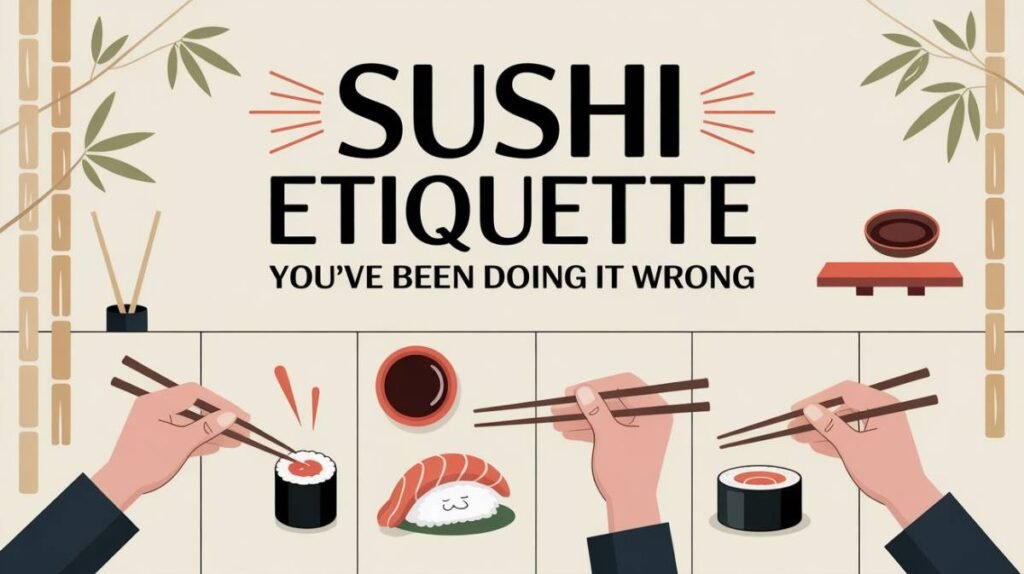
If you’re visiting a proper sushi restaurant, these details matter.
You can eat sushi with your hands. This surprises a lot of tourists. Using your fingers for nigiri sushi is perfectly acceptable even preferred by some traditionalists.
As The Hungry Tourist explains, when the sushi chef (itamae) seasons your sushi directly, adding extra soy sauce or wasabi signals to them that you’re unhappy with how they made it. At high-end sushi counters, trust the chef completely.
At casual spots, dip the fish side into soy sauce not the rice side. The rice will absorb too much and fall apart, and the balance of flavour gets ruined.
Eat sushi in one bite if you can. It’s crafted as a single piece biting it in half is considered clumsy and slightly disrespectful to the chef’s portion.
The Oshibori: That Wet Towel Is Not a Napkin
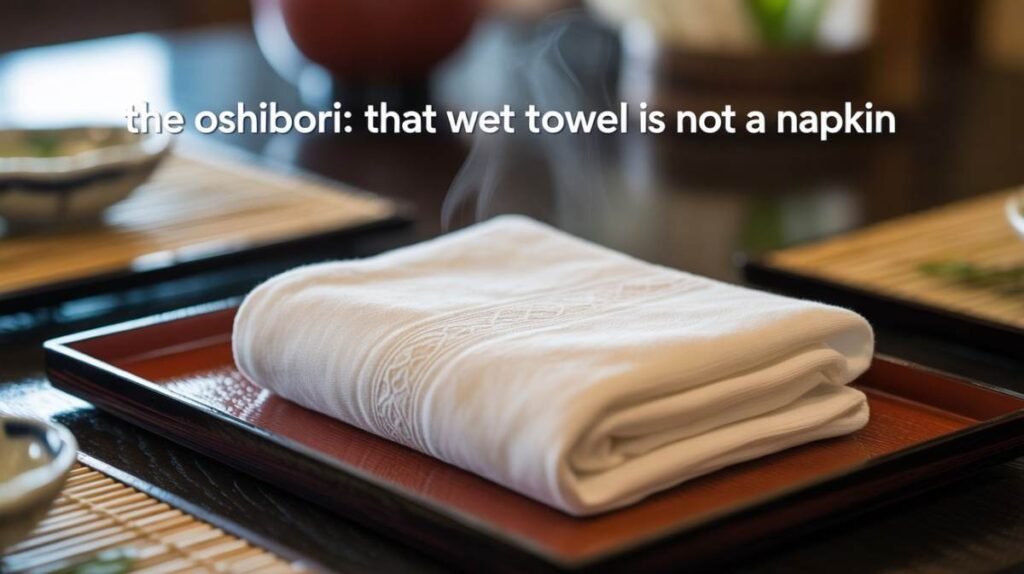
Almost every restaurant in Japan will hand you a wet towel called an oshibori when you sit down.
Japan Airlines’ guide is clear on this: the oshibori is for your hands only before and during the meal to keep your fingers clean. Wiping your face, neck, or the table with it is considered poor manners. After using it, fold it neatly and place it back on the tray.
Walking and Eating: A Bigger Deal Than You Think
In most Western countries, eating while walking is completely normal. In Japan, it’s generally frowned upon.
The Tokyo Chapter explains the thinking behind this well: food in Japan is meant to be enjoyed with pause and full attention not consumed as fuel while moving. There’s also a practical reason public trash bins are extremely rare in Japan, so eating near the vendor means you can dispose of your waste right there.
The practical rule: if you buy something from a street stall or convenience store, stand near the vendor and eat it. Exception: matsuri (festivals) and theme parks, where street food while walking is totally expected.
Slurping Noodles: Yes, Please
This one always surprises Western tourists. In Japan, slurping your ramen, soba, or udon loudly is not just acceptable it’s a sign you’re genuinely enjoying the meal.
The Japan National Tourism Organization actually lists this as a “do” feel free to slurp your noodles. There’s a practical reason too: the action cools hot noodles as you eat them, which is the traditional way to enjoy a steaming bowl.
So go ahead. Slurp away. Full permission granted.
Drinking Rules: Don’t Pour Your Own Drink
In group settings, you don’t pour your own drink. You pour for others, and someone else pours for you.
Walk Japan describes this as a continuous cycle of mutual care everyone watching everyone else’s glass. The toast word is kanpai wait for it before your first sip.
If you don’t want more alcohol, the trick is simple: leave your glass half full. Refills are typically only offered once the glass is empty.
Restaurant-Specific Rules Worth Knowing
Reservations matter deeply .Japan Living Guide notes that last-minute cancellations can have serious financial consequences for small Japanese restaurants some with only one dinner service per night.
Tatami seating shoes come off. Many traditional restaurants have floor seating on tatami mats.Japan Living Guide recommends wearing clean socks since you’ll frequently remove shoes in Japan.
Pay at the counter. In most casual and mid-range restaurants, you walk to the cashier to pay — not wait for the bill. Cash is still preferred outside major cities.
Loud conversations are frowned upon in nicer restaurants. Japanese restaurants can be very small, and the culture strongly values not disturbing others.
Kaiseki Dining: Japan’s Fine Dining Experience
If you’re splurging on a kaiseki experience Japan’s multi-course fine dining a few extra things apply.
According to MAIKOYA’s table manners guide, you should always accept what is served to you, even if you don’t plan to finish it. Refusing an appetizer or dish at a formal restaurant is considered rude though you don’t have to eat everything on the plate.
At the end of the meal, restore everything to its original arrangement: lids back on bowls, chopsticks on their rest.The Hungry Tourist also recommends saying gochisosama directly to the chef if possible at some restaurants, the chef will walk you to the door.
Food allergies? Inform the restaurant well in advance ideally when booking. Kaiseki menus are pre-planned and last-minute changes may not be possible.
Tipping: Please Don’t
This is a short one. Japan Living Guide confirms what most Japan travelers eventually learn: tipping is not customary in Japan and can even cause awkwardness. The service you receive is considered part of the restaurant’s standard no extra payment expected or wanted.
Quick Reference: Do’s and Don’ts
| Do This | Don’t Do This |
| Say itadakimasu before eating | Stick chopsticks upright in rice |
| Lift your rice bowl to eat | Pour soy sauce over rice |
| Slurp noodles freely | Walk and eat in non-tourist areas |
| Pour drinks for others | Pass food chopstick to chopstick |
| Finish your rice | Wipe your face with oshibori |
| Say gochisosama after eating | Point with chopsticks |
| Ask for smaller portions if needed | Pour your own alcohol |
| Use hands for nigiri sushi | Tip at restaurants |
Frequently Asked Questions
Is eating on the train okay in Japan?
On local city trains, generally no. On long-distance Shinkansen (bullet trains), eating is perfectly acceptable people bring bento boxes specifically for this.
Do I have to finish everything at a kaiseki restaurant?
You don’t have to finish, but it’s appreciated. If you can’t, leave the uneaten portion neatly to the side rather than mixed into the rest.
What does “omakase” mean?
It means “I’ll leave it to you” the chef decides your entire menu. This is not for picky eaters. You’ll receive whatever is served, which often includes adventurous items like sea urchin, fish roe, and squid.

Alexander Vance is your ultimate travel concierge. Specializing in budget-friendly luxury and off-beat destinations, he turns complex trip planning into easy, unforgettable adventures. His mission? To make sure your next passport stamp comes with a legendary story.