

Traveling with golf clubs can be stressful, especially when your equipment is worth hundreds or even thousands of dollars. Whether you’re flying to a golf resort, competing in a tournament, or planning a golf vacation, protecting your clubs should be a top priority. That is where a golf bag travel case becomes essential.
The best golf bag travel case does more than simply hold your clubs. It helps prevent damage during transit, protects against rough baggage handling, and makes transporting your equipment much easier. With so many options available, understanding what truly matters can help you choose a travel case that offers the right balance of protection, durability, and convenience.
Why a Golf Travel Case Matters
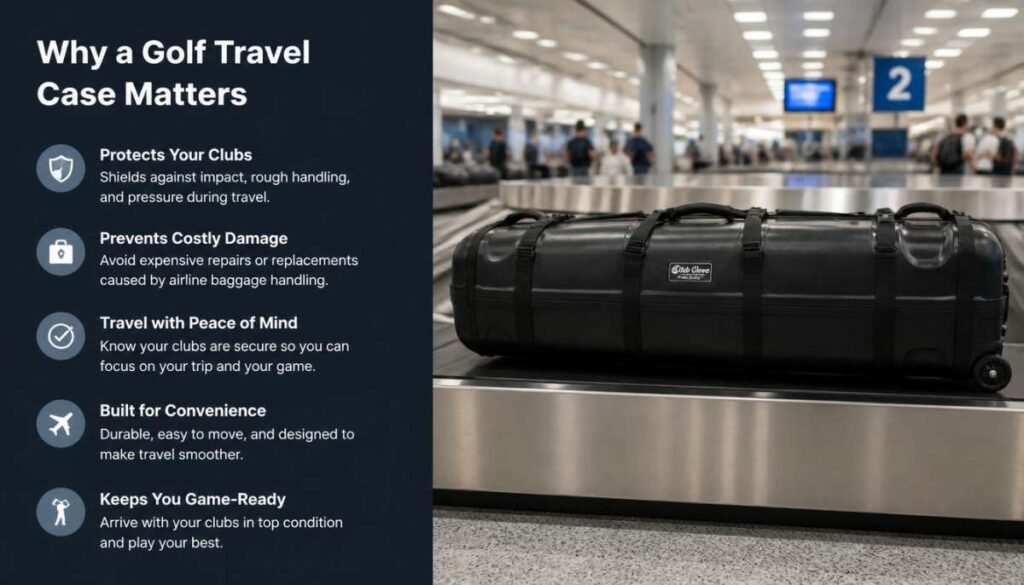
Airlines move thousands of bags every day, and golf equipment is not always handled gently. Clubs can shift during transport, shafts can bend under pressure, and expensive drivers may suffer damage from impacts.
A quality golf travel case acts as a protective barrier between your equipment and the challenges of travel. It helps reduce the risk of damage while making it easier to move your clubs through airports, hotels, and golf destinations.
What Makes a Great Golf Bag Travel Case?
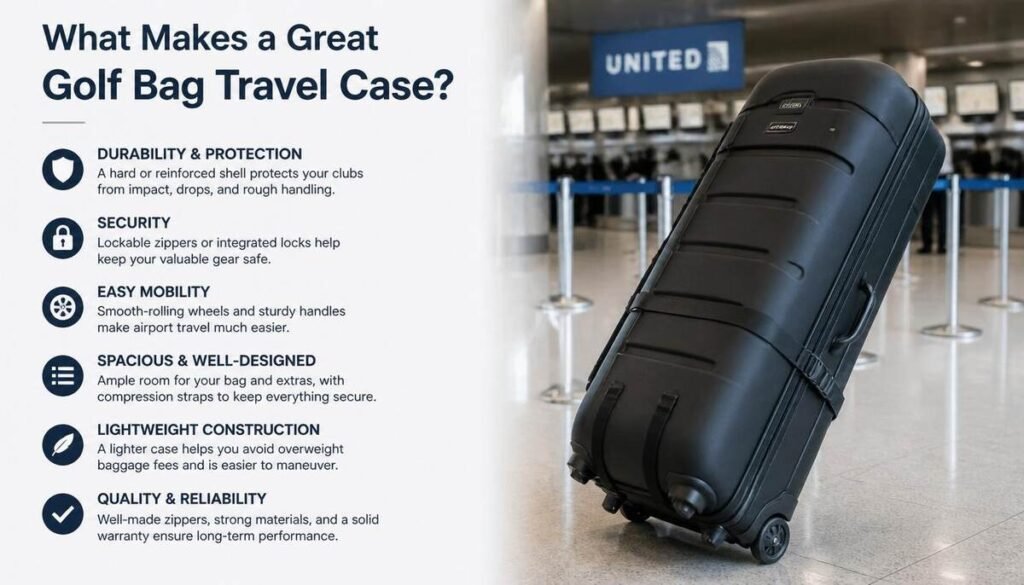
Not all golf travel cases provide the same level of protection. Some are designed for occasional travel, while others are built specifically for frequent flyers.
Impact Protection
Protection is often the most important factor when selecting a golf travel case. Reinforced structures, thick padding, and club-protection systems help absorb shocks and minimize damage during transportation.
Golfers who travel frequently often prioritize protection over all other features because replacing damaged clubs can be expensive.
Durability
Travel cases are exposed to rough handling, changing weather conditions, and repeated use. Strong materials such as ballistic nylon, reinforced polyester, and molded hard-shell components typically provide better long-term durability.
A durable travel case may cost more initially, but it often lasts for years of travel.
Wheel Quality
A travel case can become difficult to manage if the wheels are poorly designed. Smooth-rolling wheels improve mobility and reduce effort when navigating airports, parking lots, and hotel entrances.
Many experienced travelers consider wheel quality one of the most overlooked features when purchasing a golf travel case.
Storage Capacity
Extra storage compartments can be useful for shoes, gloves, rain gear, and other golf accessories. Additional storage helps reduce the number of bags needed during a trip.
However, golfers should also consider airline weight restrictions before overpacking.
Airline-Friendly Design
A travel case should be easy to transport and compatible with airline baggage requirements. Compact designs with strong carrying handles often make travel more convenient.
Many modern travel cases are specifically engineered to meet the needs of frequent airline travelers.
Hard Case vs Soft Case Golf Travel Bags
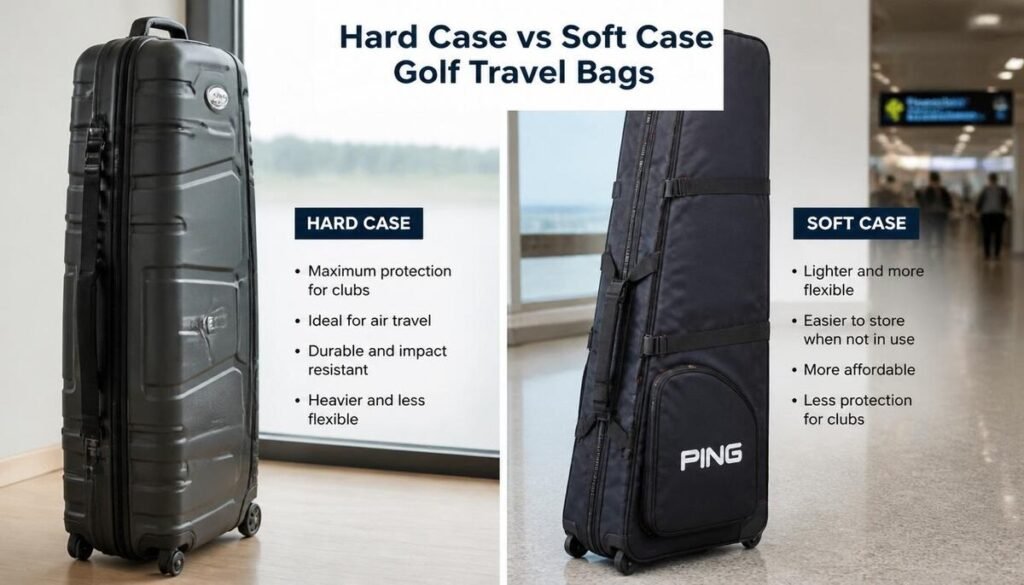
One of the biggest decisions golfers face is choosing between a hard-shell and soft-shell travel case.
| Feature | Hard Case | Soft Case |
| Protection | Excellent | Good |
| Weight | Heavier | Lighter |
| Storage | Limited | Flexible |
| Mobility | Moderate | Easy |
| Price | Usually Higher | Usually Lower |
| Airline Travel | Ideal for Maximum Protection | Popular for Convenience |
Hard cases generally provide the highest level of protection and are often preferred by golfers who travel frequently with premium equipment.
Soft cases remain popular because they are lighter, easier to store, and often more affordable while still offering substantial protection when properly packed.
Best Golf Bag Travel Cases for Different Needs

The ideal travel case depends on how often you travel and what level of protection you require.
Best for Frequent Flyers
Golfers who travel regularly should prioritize durability, impact resistance, and reinforced club protection. A travel case that can withstand repeated airline handling often provides better long-term value.
Best for Occasional Golf Trips
For golfers who travel only a few times per year, a lightweight soft case may offer sufficient protection while remaining easy to store when not in use.
Best for Premium Golf Equipment
Players carrying expensive clubs often benefit from additional protection features such as hard-shell reinforcement, internal stabilization systems, and extra padding around club heads.
Best for Budget-Conscious Golfers
Affordable travel cases can still provide reliable protection when paired with proper packing techniques. The key is finding a balance between price, durability, and essential protective features.
Common Mistakes Golfers Make When Traveling With Clubs
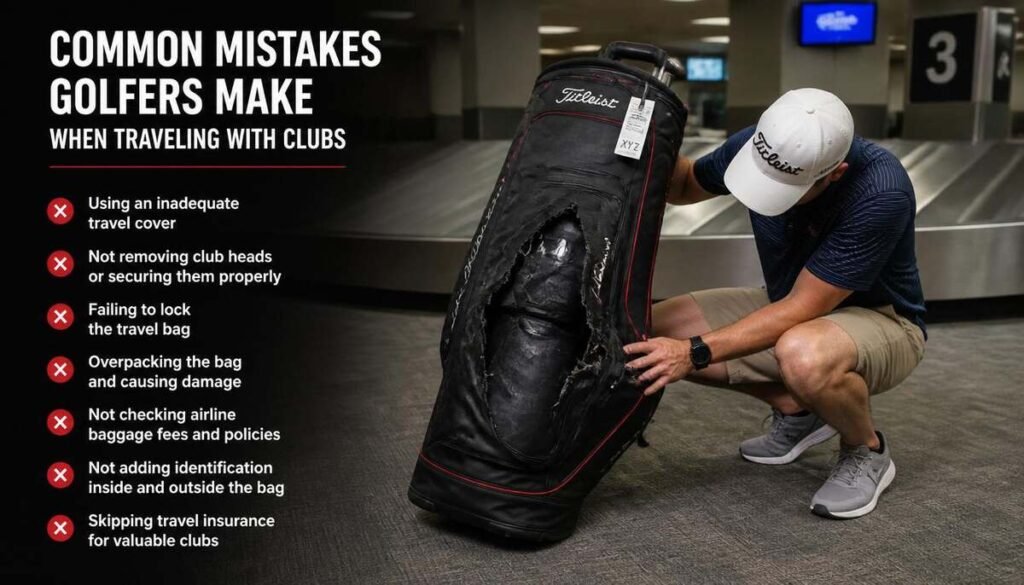
Even the best travel case cannot completely protect clubs if they are packed incorrectly.
Not Using a Club Protector
A club protector or stiff-arm device helps absorb pressure and reduce the risk of shaft damage during travel.
Overpacking the Travel Case
Adding excessive gear can increase weight and place additional stress on equipment.
Choosing Price Over Protection
Price should not be the only consideration when buying a golf travel case, as poor protection can lead to damage and unexpected replacement costs.
Failing to Secure Clubs Properly
Loose clubs can move during transit and create unnecessary wear or impact damage.
How to Protect Golf Clubs During Air Travel
Preparing clubs correctly can significantly reduce the risk of damage.
Use Head Covers
Head covers provide an additional layer of protection for drivers, woods, and putters.
Add Extra Padding
Towels, clothing, or dedicated padding can help reduce movement inside the travel case.
Secure Loose Equipment
Golf balls, rangefinders, and accessories should be stored securely to prevent shifting during transport.
Check Airline Policies
Different airlines may have varying rules regarding golf equipment. Reviewing these policies before travel can help avoid unexpected fees or issues.
Is an Expensive Golf Travel Case Worth It?
The answer depends on how often you travel and the value of your equipment.
For occasional golfers, a mid-range travel case may provide all the protection needed. However, golfers who fly regularly or own premium clubs often find that investing in a higher-quality travel case offers greater peace of mind and long-term durability.
A well-built travel case can last through years of travel while helping protect equipment worth far more than the case itself.
How to Choose the Right Golf Bag Travel Case
The best golf bag travel case is the one that matches your travel habits and protection requirements. Frequent travelers may benefit from maximum protection, while casual golfers may prioritize lightweight convenience and easy storage.
Before purchasing, consider durability, wheel quality, storage space, protective features, and airline compatibility. Evaluating these factors will help ensure that your clubs arrive safely and your travel experience remains stress-free.
Frequently Asked Questions
What is the best golf bag travel case?
The best golf bag travel case depends on your travel frequency, budget, and desired level of protection.
Are hard golf travel cases better than soft cases?
Hard cases typically offer greater protection, while soft cases provide more flexibility and convenience.
Can golf clubs get damaged during flights?
Yes. Rough baggage handling can cause damage if clubs are not properly protected.

Alexander Vance is your ultimate travel concierge. Specializing in budget-friendly luxury and off-beat destinations, he turns complex trip planning into easy, unforgettable adventures. His mission? To make sure your next passport stamp comes with a legendary story.