
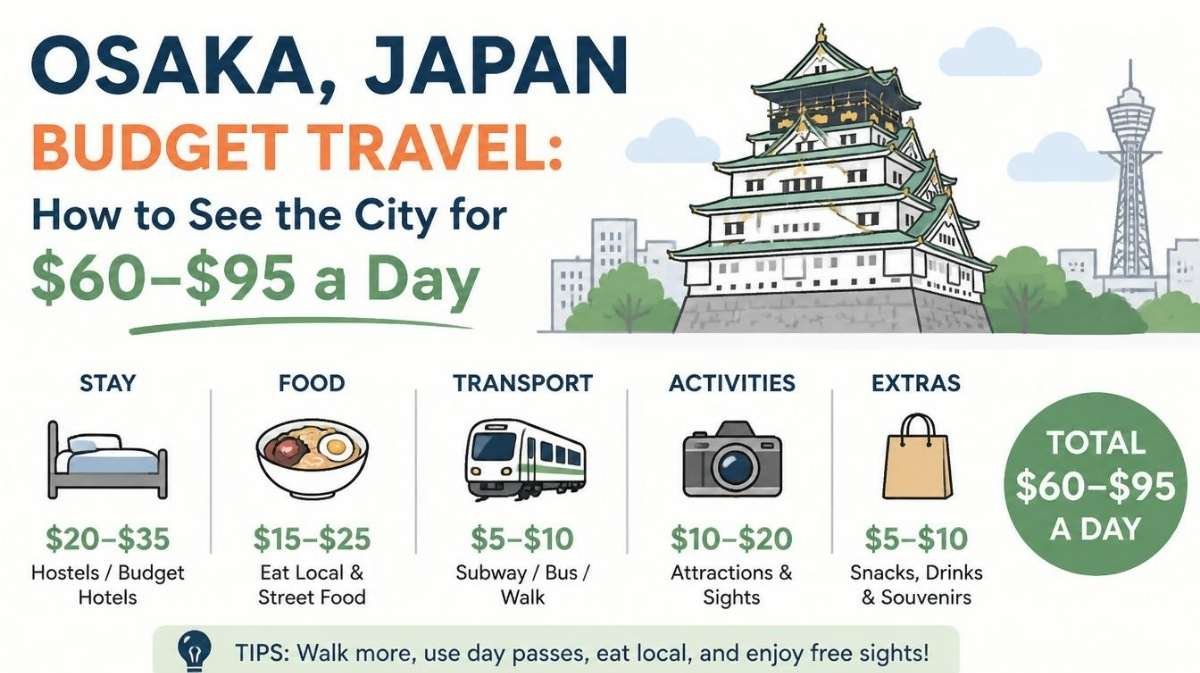
Osaka is one of the most affordable major cities in Japan to visit, and a realistic osaka japan budget travel plan works out to roughly $60–$95 USD (¥9,000–¥14,000) per day per person, covering accommodation, food, local transport, and sightseeing.
That number swings lower if you stick to hostels and convenience-store meals, or higher if you want a private room and a sit-down dinner every night. The short version: Osaka is genuinely one of the cheaper big cities in Japan, and a week there is very doable without blowing past $1,000 total if you’re intentional about where the money goes.
Best Time to Visit Osaka on a Budget
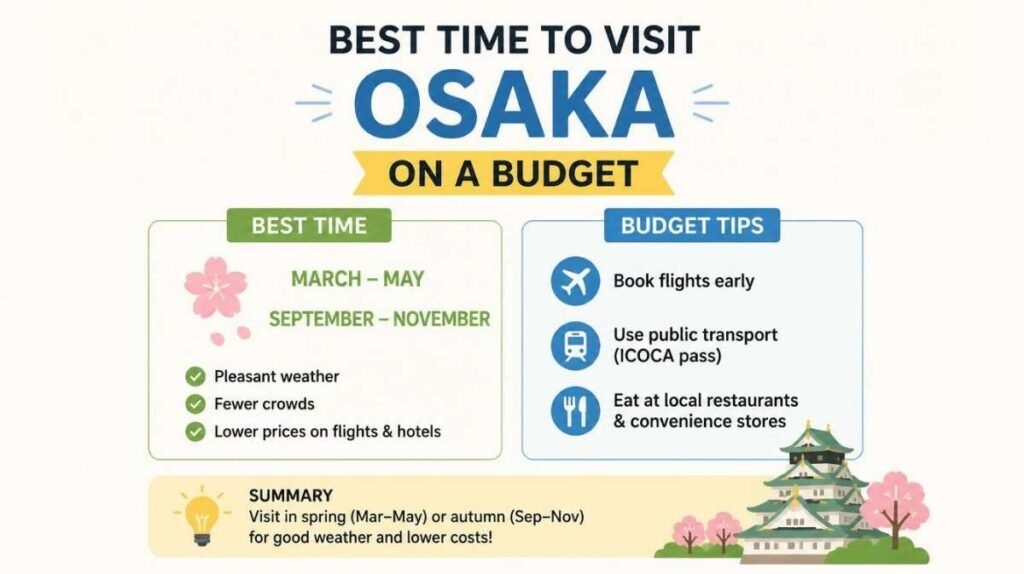
When you go matters almost as much as where you stay. Osaka’s peak seasons cherry blossom season in late March/early April and the autumn foliage weeks in November bring the highest flight and hotel prices of the year, along with the biggest crowds.
Traveling during off-peak months like late January, February, or June brings accommodation and flight costs down noticeably, often without much of a trade-off in weather, since Osaka stays mild for most of the year.
Summer (July–August) is cheap but genuinely hot and humid, so it’s worth weighing comfort against savings if you’re traveling during that stretch.
Finding Cheap Flights to Osaka
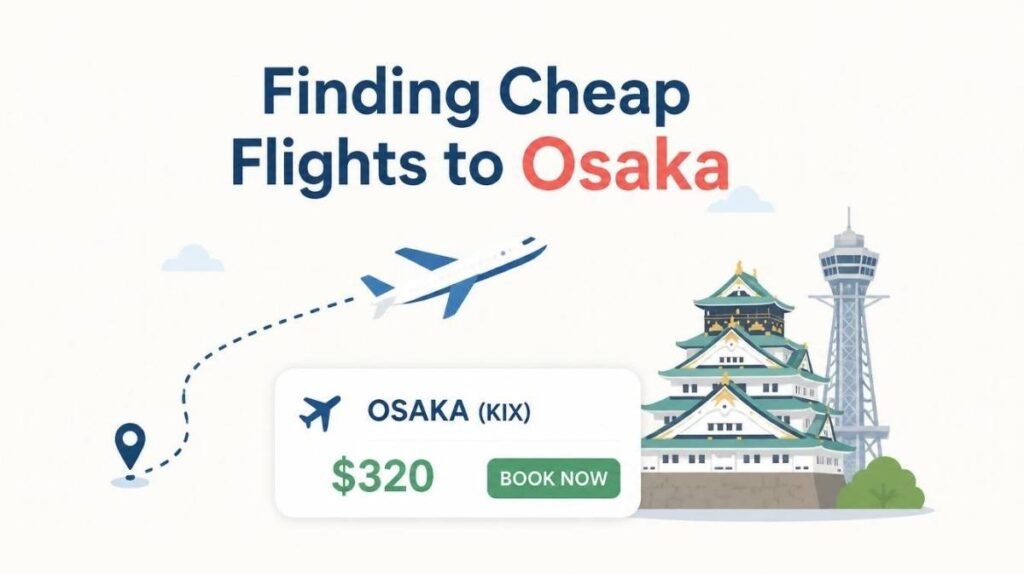
Flights are usually the single biggest line item in an Osaka trip, so it’s worth treating them as their own mini-project. Setting fare alerts a few months out, flying into Kansai Airport rather than routing through Tokyo, and staying flexible on exact travel dates by a few days can each shave a meaningful amount off the ticket price. Booking during shoulder-season months, rather than the two or three weeks around cherry blossom season, tends to make the biggest difference of all.
Also read : Best Time to Travel to Korea: Your 2026 Ultimate Guide
Getting from Kansai Airport into the City
Kansai Airport is where nearly every Osaka trip starts, and the transfer itself is one of the easiest ways to save money before your trip even begins. Once through immigration and customs travelers from visa-on-arrival countries can speed this up by registering on Visit Japan Web ahead of time the most budget-friendly way into the city is the train.
The Kansai Airport Express “Haruka” connects directly to major Osaka stations and is both faster and cheaper than a taxi, which makes it the default choice for anyone watching their yen. The airport itself also has baggage storage, currency exchange counters, and a tourist information desk, so there’s no need to sort out cash or maps before you land.
Where to Stay: Budget Hotels, Capsule Hotels, and Ryokans
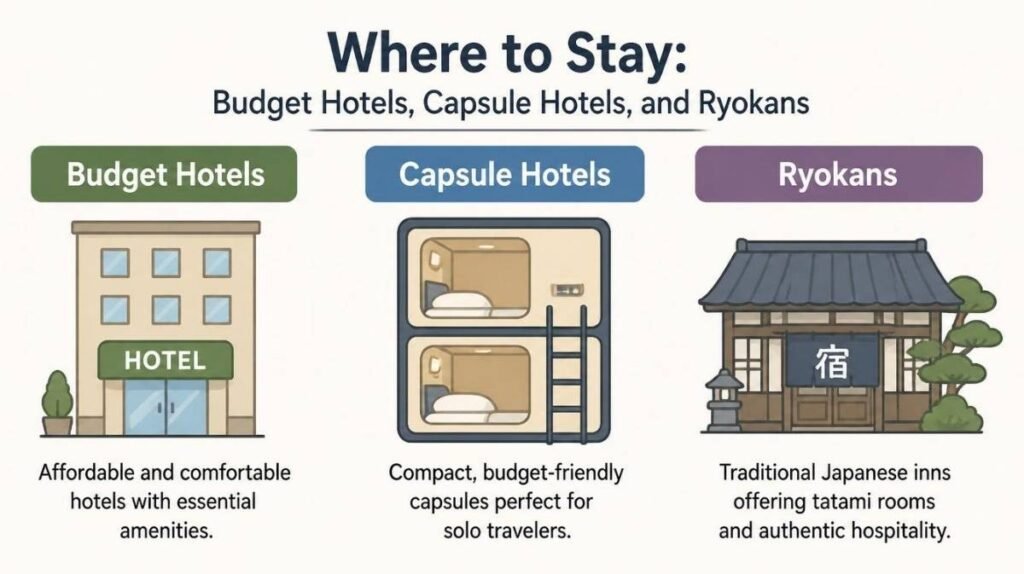
Accommodation in Osaka splits into three realistic budget tiers depending on how much privacy and comfort you want versus how much you’re willing to spend.
- Budget Hotels private rooms at reasonable rates; compare a few booking sites before committing
- Capsule Hotels a bed, locker, and shared facilities; ideal for solo travelers and spread across the city
- Family-Run Ryokans traditional Japanese inns; smaller ones outside tourist hubs are far more affordable than central ones while still offering authentic hospitality
Dining on a Budget: Where Locals Actually Eat

Osaka’s cheapest, most authentic food isn’t found in the touristy Dotonbori strip it’s a short walk or train ride away, in neighborhoods and formats built for everyday eating rather than sightseeing crowds.
- Shinsekai kushikatsu, local izakayas, and small family-run eateries at prices well below Dotonbori
- Food Halls like the one below the Umeda Sky Building, where multiple stalls let you mix and match dishes
- Teishoku (Set Meals) lunchtime bundles of a main, rice, miso soup, and sides for a fraction of dinner prices
Being Smart About Long-Distance Trains
If your trip stretches beyond Osaka itself say, onward to Tokyo or Hiroshima long-distance trains are where costs can quietly add up.
A Japan Rail Pass only pays off if you’re covering significant ground by bullet train, so it’s worth comparing the pass price against booking individual shinkansen tickets before assuming it’s the cheaper option.
For day trips to Kyoto, Nara, or Kobe, regular limited-express or local trains are almost always more economical than the shinkansen, and the time difference is usually just a few extra minutes.
Temples and Shrines Worth Visiting for Free
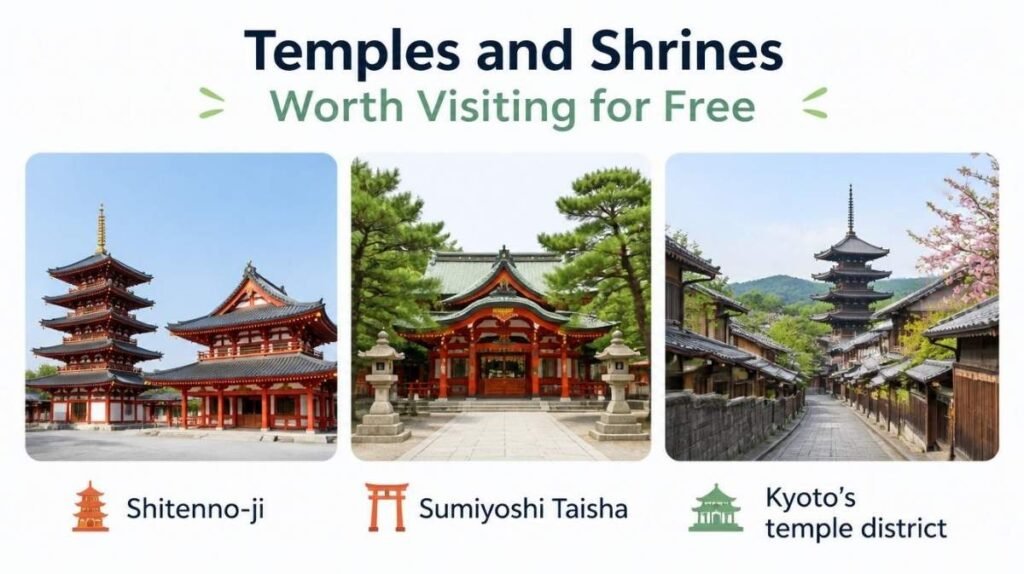
Beyond Osaka Castle, the city and its surroundings have a handful of temples and shrines that cost nothing to visit and offer a quieter contrast to the neon of Dotonbori.
- Shitenno-ji one of Japan’s oldest Buddhist temples; free outer grounds, small fee for the inner precinct
- Sumiyoshi Taisha distinctive architecture and an arched bridge, no entry fee
- Kyoto’s temple district worth extra time on a day trip if shrine-hopping is a priority
Must-Visit Attractions That Won’t Drain Your Wallet
Osaka’s biggest draws are also some of its most affordable, especially when paired with the Osaka Amazing Pass, which bundles transit with free or discounted entry to several of them.
- Osaka Castle free grounds and gardens; a modest fee only applies for the museum inside
- Dotonbori free to walk; neon signs, canal views, and the Glico Running Man
- Umeda Sky Building reasonably priced ticket for panoramic city views, also useful for orientation
Day Trips Worth the Train Fare
Osaka’s location makes it a strong home base for day trips, and building one into your osaka japan budget travel itinerary is usually the best way to add variety without adding real cost.
- Kyoto serene temples and shrines, roughly 30–45 minutes by train
- Nara the famous deer park, a short regional train ride away
- Kobe bustling Chinatown and a different city vibe entirely
Universal Studios Japan and Other Paid Attractions
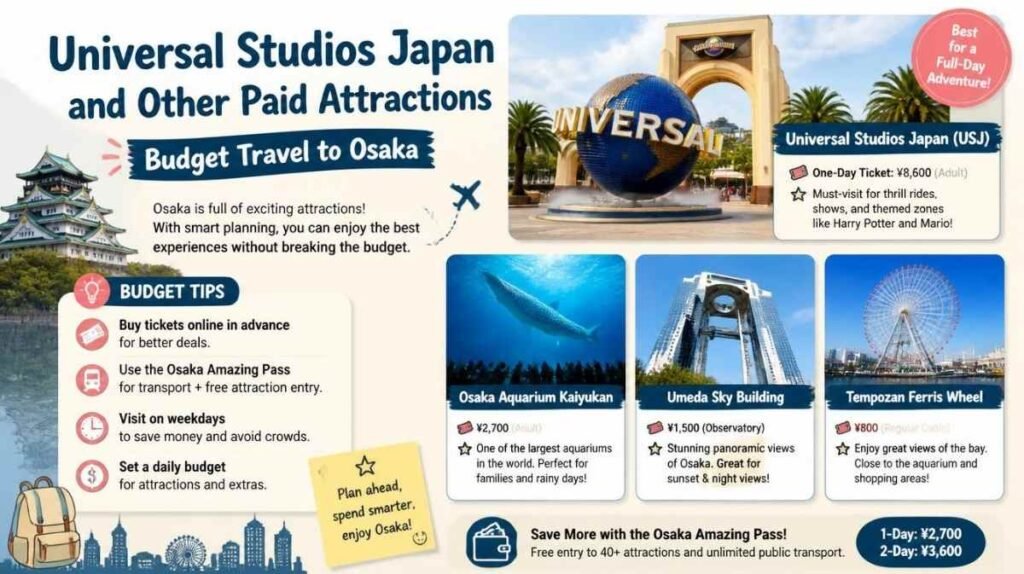
If Universal Studios Japan is on your list, a one-day pass or a discounted evening ticket will cost noticeably less than a full-day pass and still gets you a solid chunk of the park.
If USJ isn’t a priority, skipping it altogether and leaning on Osaka’s free and low-cost attractions is the more budget-friendly route there’s enough to fill several days without a single big-ticket purchase.
Hidden Gems That Skip the Tourist Markup
Away from the well-known spots, a handful of lesser-visited places are worth the detour if you want to avoid crowds and inflated prices.
- Tsurumi Ryokuchi Park spacious green space with far fewer tourists than central parks
- Osaka Maishima Lily Garden seasonal blooms without the crowds of more famous gardens
- Open-Air Farmhouse Museum a genuinely different, low-cost slice of local history
Daily Budget Breakdown at a Glance
| Category | Daily Cost (USD) | Daily Cost (JPY) | Where It Goes |
| Accommodation | $25–$45 | ¥3,700–¥6,700 | Capsule hotel or hostel dorm |
| Food | $15–$25 | ¥2,200–¥3,700 | Street food, conbini, food halls |
| Transportation | $5–$10 | ¥750–¥1,500 | IC card or Osaka Amazing Pass |
| Activities | $5–$15 | ¥750–¥2,200 | Mix of free and paid attractions |
| Total per day | $60–$95 | ¥9,000–¥14,000 |
For a full week, that puts most travelers between $420 and $665, which is exactly why the answer to “is $1000 enough for a week in Japan” is generally yes — even leaving room for a splurge meal or a day trip to Kyoto.
Step-by-Step: Planning Your Osaka Budget Trip
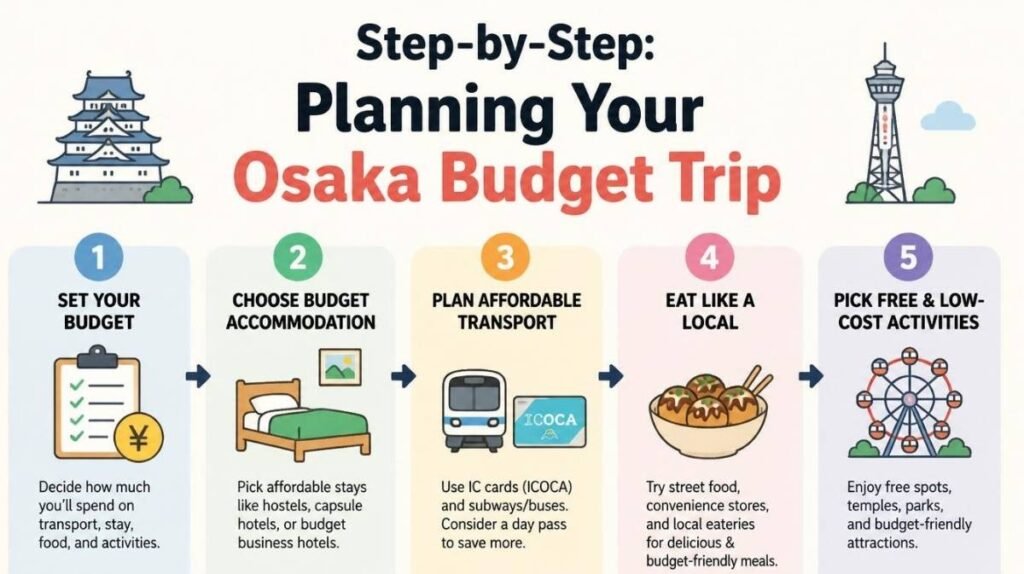
- Set your total trip budget first. Multiply your target daily spend by the number of days, then add 15–20% as a buffer for flights, visas, or unplanned splurges.
- Book accommodation 4–6 weeks out. Capsule hotels like Nine Hours and hostels like J-Hoppers Osaka Guesthouse fill up fast for weekends, and early booking on Booking.com or Agoda usually locks in the lowest rate.
- Buy an IC card the moment you land. An ICOCA or Suica card lets you tap through subways, buses, and convenience stores without buying individual tickets each time.
- Decide if the Osaka Amazing Pass is worth it. If you’re planning to hit four or more paid attractions in a day, the pass usually pays for itself through free entry and discounted admission.
- Build your itinerary around free and low-cost anchors. Dotonbori, the Osaka Castle grounds, and several temples cost nothing to walk through build paid activities like the Cup Noodles Museum around them.
- Eat where locals eat. Depachika food halls in the evening (when prices drop) and conbini meals under ¥500 keep food costs down without sacrificing quality.
What You’ll Need Before You Go
- A valid passport with at least 6 months validity remaining
- An IC card (ICOCA or Suica), purchasable at any train station on arrival
- A pre-booked SIM or pocket WiFi for navigation and translation apps
- A reservation confirmation for your first night’s accommodation
- Cash in small yen denominations — many street food stalls and small shops don’t take cards
Building a Realistic Osaka Japan Budget Travel Itinerary
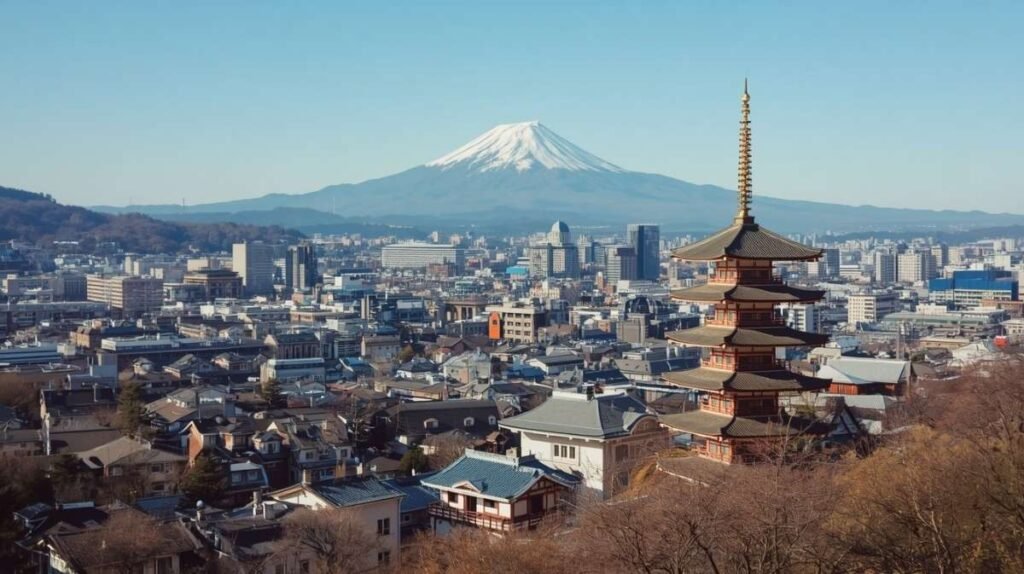
A well-paced osaka japan budget travel itinerary usually runs 3–5 days in the city itself, with an optional day trip to Kyoto or Nara folded in. Day one is best spent near Dotonbori and Shinsekai, where you can walk the neon-lit streets, try takoyaki and okonomiyaki, and get oriented without spending much beyond food.
Day two works well around Osaka Castle and the surrounding park the grounds are free, and you only pay if you want to go inside the museum. If sightseeing is a priority for the rest of the trip, this is also the point where the Osaka Amazing Pass starts to make sense, since its 1-day and 2-day options bundle unlimited subway rides with discounted or free entry to dozens of attractions.
Is Osaka Cheap for Tourists Compared to Other Japanese Cities?
Relative to Tokyo, Osaka tends to run noticeably cheaper on accommodation and food while offering a comparable range of things to see and do.
A capsule hotel bed in Osaka often costs several dollars less per night than an equivalent option in Tokyo, and street food culture in areas like Shinsekai keeps meal costs low without pushing travelers toward tourist-trap pricing.
For anyone converting costs to rupees, a full week flights aside typically lands well under 2 lakh INR when accommodation and food stay on the budget end of the range shown above.
Frequently Asked Questions
How much budget do I need for an Osaka trip?
Most travelers spend $60–$95 USD (¥9,000–¥14,000) per day on accommodation, food, transport, and activities, which puts a 5-day Osaka trip at roughly $300–$475 before flights.
Is $1000 enough for 1 week in Japan?
Yes, for a budget-conscious trip focused on Osaka and nearby day trips, $1,000 comfortably covers a week of accommodation, food, and local transport, leaving some room for one or two paid attractions.
Is Osaka cheap for tourists?
Osaka is generally cheaper than Tokyo for accommodation and food, with widely available budget options like capsule hotels, hostels, and street food that keep daily costs on the lower end of Japan’s overall price range.
Is 2 lakh enough for a Japan trip?
For a trip centered on Osaka with a short Kyoto or Nara day trip, 2 lakh INR (roughly $2,400) is generally more than enough to cover a week or more of accommodation, food, transport, and activities, excluding international flights.

Alexander Vance is your ultimate travel concierge. Specializing in budget-friendly luxury and off-beat destinations, he turns complex trip planning into easy, unforgettable adventures. His mission? To make sure your next passport stamp comes with a legendary story.